A collaboration between Downforce Technologies, Boolah Group, and Asahi Group that’s shaping the future of beer from paddock to pint.
The Boolah Group
Downforce partnered with Boolah Group and Asahi Group to demonstrate how farm-level data can be captured, verified and applied across the beer supply chain. Rather than focusing on consumer-facing claims, this work centres on data integrity, transparency and practical decision-making, building confidence in how sustainability is understood and managed from the paddock up.
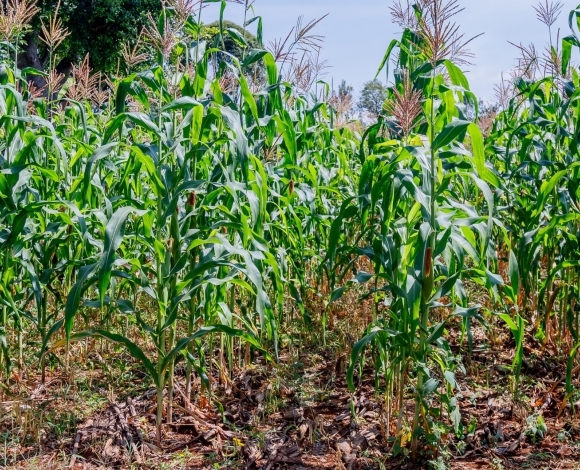
As expectations around sustainability, transparency and accountability continue to rise, food and beverage companies are looking more closely at how their raw materials are produced and how those impacts are measured. For beer, barley is not just a key ingredient, it is one of the most significant variables influencing the product’s environmental footprint. Malt accounts for about 7% and barley, just under 4% of Asahi’s total emissions, underscoring the importance of improving barley production practices across its supply chain strategy. Understanding what happens on farm, from inputs through to soil health and yield, is essential if sustainability commitments are to be supported by credible, decision-ready data.
Reporting across Supply Chains
Agricultural production sits at the foundation of many consumer products, yet it has historically been one of the hardest parts of the supply chain to measure consistently. On farm, a wide range of activities contribute to emissions, including fuel use, fertiliser application, chemical inputs and field operations. At the same time, crops and soils can play a role in storing carbon, depending on how they are managed.
For large food and beverage companies, most emissions occur outside their direct operations, embedded in raw materials and supply chains. These impacts are commonly grouped under what is known as Scope 3 emissions. Scope 3 emissions are often the largest and most complex part of a company’s footprint, precisely because they depend on activities that sit beyond direct control. Improving the quality of this data requires closer collaboration between growers, processors, framework developers and technology providers.
This is the challenge Regen4real – a sustainability framework developed by Boolah - was designed to address.
Collaboration for Credible Decision-Making
This collaboration brings together three distinct but complementary roles across the barley supply chain, creating a clear and credible pathway from farm activity to supply chain decision-making. By clearly defining roles and aligning data, technology and end users, this approach demonstrates that credible sustainability outcomes are built on more than a single tool or organisation. They rely on quality data, transparency and collaboration across the supply chain.
- Regen4real provides the sustainability framework, defining what data matters and how it should be interpreted across complex farming systems.
- Downforce Technologies delivers measurement and verification, translating on-farm activity into data aligned with recognised reporting standards.
- Asahi applies these insights within its barley supply chain to inform sustainability decision-making and governance.
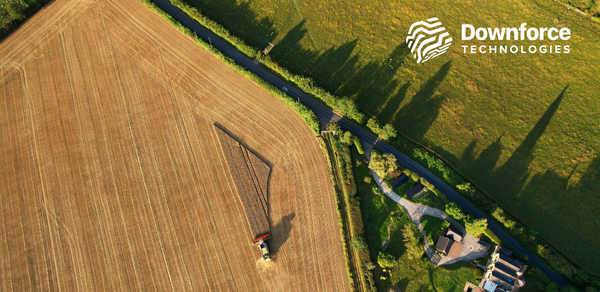
Downforce deployed its US patented and ISO 14064-validated monitoring technology to deliver farm-level data across the supply chain. Our platform measured Soil Organic Carbon (SOC) levels by integrating ground-based data and satellite observations to measure annual SOC levels from 2017 to the present day. Combining scientifically robust data with contextual understanding ensures transparency across the supply chain, for credible sustainability claims.
“Regen4real was developed to bridge the gap between what happens on farm and what end users need to understand and report. This work shows how real data, collected at commercial scale, can support more credible and practical sustainability outcomes.”
— Stuart Tighe, Founder and CEO, Boolah Group
Scalable Sustainability
Regen4real acts as the organising framework, connecting measured farm-level data to traceability, reporting and broader sustainability outcomes, and ensuring insights generated on farm remain meaningful and decision-ready further along the supply chain.
- For growers, this creates greater visibility into how management decisions influence outcomes beyond yield alone.
- For end users, it supports stronger governance and confidence in sustainability reporting.
- For the broader industry, it offers a practical, scalable model that improves transparency without overstating claims or relying on assumptions.
As expectations around transparency and accountability continue to grow, approaches that connect farm-level data with broader sustainability frameworks, including the Land Sector & Removals Standard and GHG Protocol, will become increasingly important. This collaboration shows how closer alignment between farming, technology and end users can support more grounded, credible and scalable sustainability outcomes for the future of food and beverage production.
Download the full Case Study here.
To learn more about our approach for measuring SOC levels, connect with our team: info@downforce.tech