Growing change together with Farm Africa
Farm Africa is an international NGO working with smallholder farmers across eastern Africa to reduce poverty and improve food security through sustainable agriculture.
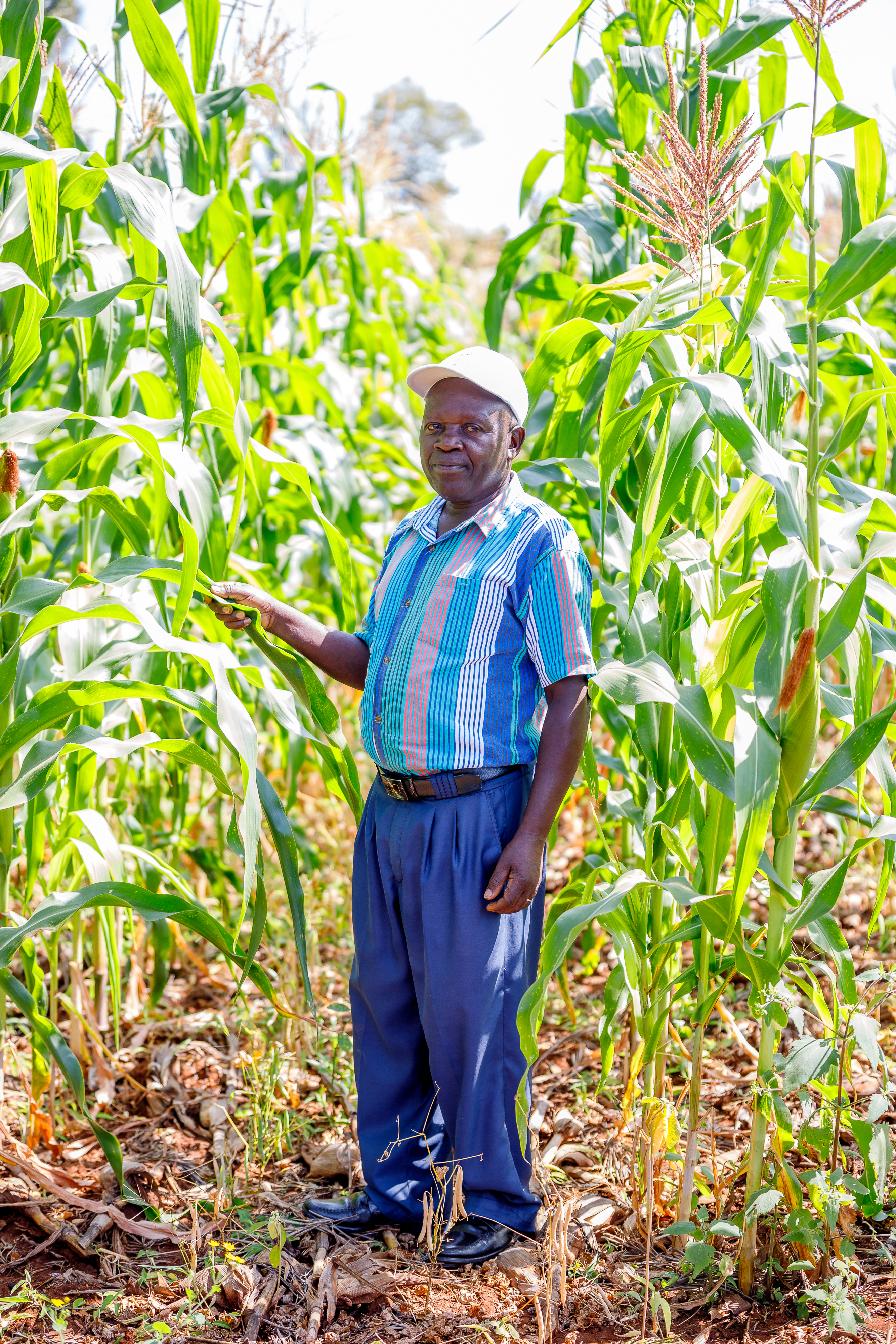
In Kenya, the organisation supports farmers to adopt climate-smart and regenerative farming practices that restore degraded soils, increase productivity and improve rural livelihoods. One of the organisation’s flagship initiatives is the Strengthening Regenerative Agriculture in Kenya (STRAK) project, which promotes sustainable farming practices such as agroforestry, intercropping, crop rotation, mulching and the use of organic manure. Through the STRAK project funded by the IKEA Foundation through AGRA, Farm Africa has supported more than 50,000 farmers in Embu and Tharaka Nithi Counties to adopt regenerative agriculture practices that restore soil health while increasing farm productivity.
Farm Africa partnered with Downforce Technologies to measure, monitor and verify changes in soil carbon across large landscapes. The primary objective was: To generate verifiable data on soil carbon sequestration, strengthen evidence of the impact of regenerative agriculture and demonstrate measurable environmental and economic returns for farmers.
“These results clearly demonstrate that regenerative agriculture is not just an environmental intervention, it is an economic one.”
Mary Nyale
Country Director
Farm Africa Kenya
Challenge: A credible evidence base
Across eastern Kenya, many smallholder farmers face declining soil fertility, erratic rainfall and falling agricultural productivity. Years of continuous cultivation, soil erosion and over-reliance on chemical inputs have degraded soils, reducing farmers’ resilience to climate change and threatening long-term food security.
Without credible monitoring systems, it was difficult to demonstrate the true environmental and economic value of regenerative agriculture interventions across smallholder farms. Farm Africa required a reliable and scalable way to measure soil health improvements and quantify Soil Organic Carbon (SOC) levels across thousands of farms. Such data would allow the organisation to:
- validate the impact of regenerative agriculture
- strengthen programme evaluation
- support participation in emerging carbon markets
- drive long-term fundraising for Farm Africa
Solution: Scalable SOC measurement
Downforce Technologies integrated ground-based data and satellite observations to measure and report annual SOC levels from 2017 to the present day. By combining scientifically robust data with contextual understanding, Downforce analysed soil carbon dynamics across farms participating in the STRAK programme.
Measuring SOC levels at scale, without the need for costly and time-intensive field sampling, Downforce:
- analysed changes in SOC across regenerative agriculture sites
- generated landscape-level insights on soil health improvements
- provided credible data to support carbon accounting and climate reporting
The resulting SOC data provides Farm Africa and its partners with a powerful evidence base demonstrating that regenerative agriculture improves soil health while capturing atmospheric carbon. The data also supports farmer participation in carbon finance initiatives such as the Rabobank ACORN programme, which rewards farmers for carbon sequestration through agroforestry.
Results: Improved economic benefits
More than 50,000 farmers have experienced improved productivity through the STRAK project. This has been achieved by the adoption of regenerative agricultural practices that restore soil health, which boosts yields, improves water retention while building climate resilience. Analysis revealed a consistent upward trend in SOC levels on farms supported by Farm Africa compared to non-supported farms and county-wide averages. SOC levels per hectare on project farms remained consistently higher across the monitoring period, demonstrating the positive impact of regenerative practices such as agroforestry, mulching and improved soil management.
On average, soil carbon levels increased from the low 40 tonnes per hectare range in 2017 to around 50 tonnes per hectare by 2024. This steady growth indicates that regenerative agriculture practices are helping soils store more carbon over time.
Across the landscape, this adds up to an estimated 1.11 million tonnes of soil organic carbon, equivalent to approximately 4.07 million tonnes of CO₂ stored in the soil. This helps farmers tackle climate change while building resilience to drought and erratic rainfall.
In Tharaka Nithi Country, farmers practicing regenerative maize farming have achieved a Benefit-Cost Ratio of 5.0, meaning every shilling invested returns five shillings in value. In Embu, similar methods have generated net benefits exceeding Ksh 211,509 per hectare in maize cultivation.
Farmers implementing practices such as mulching, agroforestry and intercropping reported increased:
- Crop yields – increased by up to 81 per cent per acre, supporting income generation for smallholder farmers
- Soil water retention – improved by 92 percent, helping farms better withstand drought and irregular rainfall
- Soil biodiversity – increased beneficial nematode populations by 200 percent, sustaining long-term agricultural productivity. Beneficial nematodes are tiny soil helpers that feed on living things like bacteria, fungi and viruses that turn dead plants and animals into nutrients, helping plants grow better. Their increase is important because they make the soils healthier and increase on yields. Arbuscular Mycorrhizal Fungi (AMF), a type of micro fungi, colonisation increased by 63 percent, helping plants absorb more water and nutrients.
“My training on the practice of regenerative agriculture has enabled me to practice intercropping combined with mulching, helping to retain soil moisture, suppress weeds, regulate the soil’s temperature, control soil erosion and improve soil structure. This has significantly increased my yields. I now harvest three bags of maize, rather than one, from the same piece of land!”
Stanley Riungu,
Smallholder farmer
STRAK project in Tharaka Nithi
By combining farmer-led regenerative practices with advanced SOC measurement, this model provides a scalable pathway to restore degraded soils, improve smallholder farmer incomes, generate verified carbon sequestration and scale climate-smart agriculture across Africa. By building confidence in the outcomes, data driven soil monitoring supports the ongoing investment in and delivery of regenerative agricultural programs.
Download the full Case Study here.
To learn more about our approach for measuring SOC levels, connect with our team: info@downforce.tech