Using the Tools
Project Planning: How to Guide
Project Planning: How to Guide
Downforce Technologies' Project Planner helps you identify the optimal areas on your property for strategic agricultural initiatives. Whether you're planning regenerative agriculture programs, piloting new products like biostimulants, or setting up verified carbon projects, this tool analyzes long-term carbon potential
Downforce Technologies' Project Planner helps you identify the optimal areas on your property for strategic agricultural initiatives. Whether you're planning regenerative agriculture programs, piloting new products like biostimulants, or setting up verified carbon projects, this tool analyzes long-term carbon potential
Project Planner
Overview
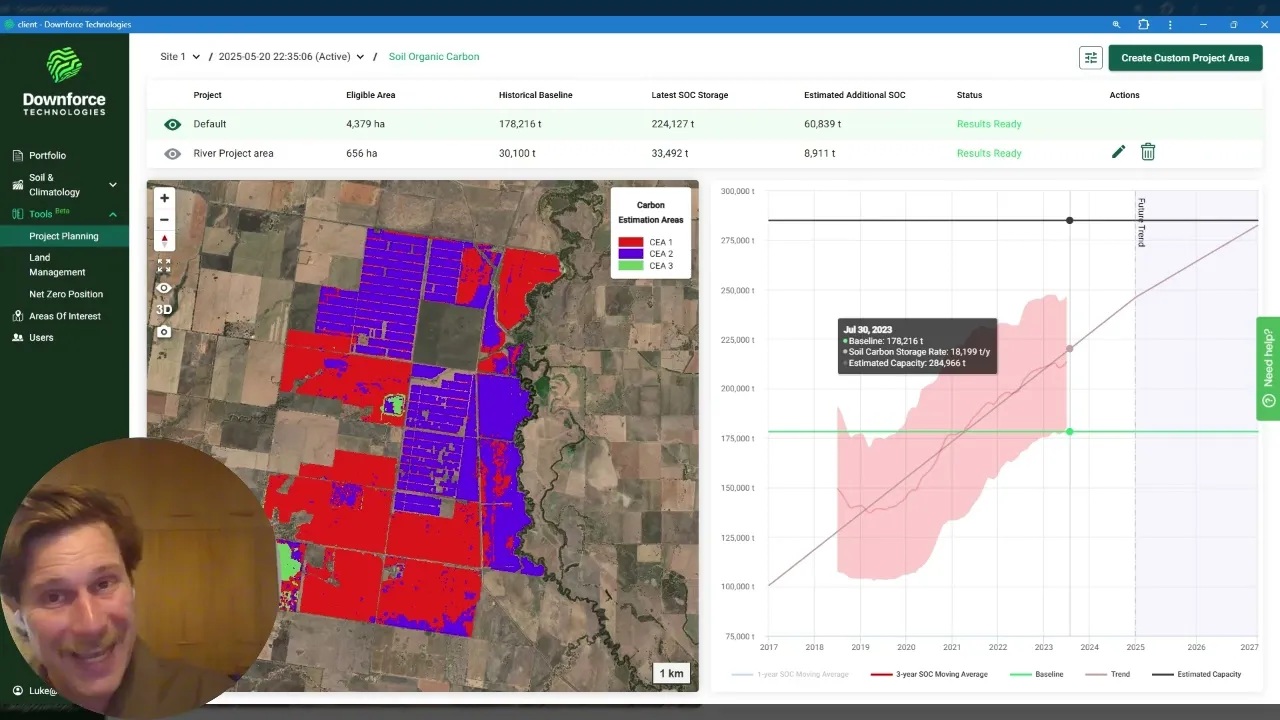
Downforce’s Project Planner helps you identify the best areas on your property for strategic agricultural initiatives. Whether you’re planning regenerative agriculture programmes, piloting new products like biostimulants, or setting up verified carbon projects, it analyses long-term carbon potential and historical trends to help your project succeed and deliver a strong return.
Analyse your property’s carbon performance
Track what’s working across your whole property with data-driven insight.
Use three-year moving averages to identify areas where your soil is storing carbon consistently
Automatically establish historical baselines to understand additionality over time
Calculate remaining carbon storage potential to prioritise areas with the greatest upside
Identify zones showing positive trends that indicate soil responsiveness to management
Create strategic project areas
Design targeted zones rather than risking your whole operation.
Create a project area by field selection, upload existing boundaries, or draw custom areas
Start with manageable sizes that match your risk tolerance, operational capacity and budget
Test approaches thoroughly in smaller areas before scaling to larger ones
Generate project data
Turn carbon data into actionable strategies.
Evaluate project viability using total area, historical baseline, current storage and remaining potential
Export data and insight to support planning and implementation decisions
Compare multiple project areas to prioritise your most promising opportunities
Recommendations for implementation
Design effective projects
Once you’ve identified your best areas, implement strategically.
Establish control areas next to treatment zones for accurate comparison
Document baseline conditions thoroughly before you start
Phase rollouts, starting with the most promising areas
Consider seasonal timing, equipment compatibility and monitoring requirements
Match project type to area
Different goals suit different areas of your property.
Regenerative agriculture programmes
Target areas with moderate carbon storage showing upward trends and remaining capacity
Focus on suitable operational zones for implementing new practices
Product trials and pilots
Choose areas with consistent baseline performance for reliable comparison
Ensure the area is large enough for statistically meaningful results, with similar soil conditions throughout
Carbon sequestration projects
Target high-capacity areas with significant remaining storage potential and positive trends
Convert to CO₂ equivalent using the settings icon to understand potential carbon credit values
Monitor and scale success
Track performance and expand what works.
Monitor carbon trends alongside yield, soil health, operational efficiency and costs
Scale successful practices to similar areas identified through the tool
Plan projects in accessible locations that represent conditions for future scaling
The Project Planner turns complex carbon data into clear strategies, helping you invest in agricultural innovation where it delivers the biggest impact and return.
For support or to share feedback, contact support@downforce.tech
Project Planner
Overview
Downforce’s Project Planner helps you identify the best areas on your property for strategic agricultural initiatives. Whether you’re planning regenerative agriculture programmes, piloting new products like biostimulants, or setting up verified carbon projects, it analyses long-term carbon potential and historical trends to help your project succeed and deliver a strong return.
Analyse your property’s carbon performance
Track what’s working across your whole property with data-driven insight.
Use three-year moving averages to identify areas where your soil is storing carbon consistently
Automatically establish historical baselines to understand additionality over time
Calculate remaining carbon storage potential to prioritise areas with the greatest upside
Identify zones showing positive trends that indicate soil responsiveness to management
Create strategic project areas
Design targeted zones rather than risking your whole operation.
Create a project area by field selection, upload existing boundaries, or draw custom areas
Start with manageable sizes that match your risk tolerance, operational capacity and budget
Test approaches thoroughly in smaller areas before scaling to larger ones
Generate project data
Turn carbon data into actionable strategies.
Evaluate project viability using total area, historical baseline, current storage and remaining potential
Export data and insight to support planning and implementation decisions
Compare multiple project areas to prioritise your most promising opportunities
Recommendations for implementation
Design effective projects
Once you’ve identified your best areas, implement strategically.
Establish control areas next to treatment zones for accurate comparison
Document baseline conditions thoroughly before you start
Phase rollouts, starting with the most promising areas
Consider seasonal timing, equipment compatibility and monitoring requirements
Match project type to area
Different goals suit different areas of your property.
Regenerative agriculture programmes
Target areas with moderate carbon storage showing upward trends and remaining capacity
Focus on suitable operational zones for implementing new practices
Product trials and pilots
Choose areas with consistent baseline performance for reliable comparison
Ensure the area is large enough for statistically meaningful results, with similar soil conditions throughout
Carbon sequestration projects
Target high-capacity areas with significant remaining storage potential and positive trends
Convert to CO₂ equivalent using the settings icon to understand potential carbon credit values
Monitor and scale success
Track performance and expand what works.
Monitor carbon trends alongside yield, soil health, operational efficiency and costs
Scale successful practices to similar areas identified through the tool
Plan projects in accessible locations that represent conditions for future scaling
The Project Planner turns complex carbon data into clear strategies, helping you invest in agricultural innovation where it delivers the biggest impact and return.
For support or to share feedback, contact support@downforce.tech