Soil
Soil is the Secret Ingredient
Soil is the Secret Ingredient
Downforce Technologies is committed to providing up to date and relevant data to empower landowners and farmers to improve the health of their land and the planet.
Downforce Technologies is committed to providing up to date and relevant data to empower landowners and farmers to improve the health of their land and the planet.
Downforce Technologies is committed to providing up-to-date, relevant data to help landowners and farmers improve the health of their land - and the planet.
Soil is the secret ingredient for carbon sequestration, and it's beneath all our feet. If we added just 1% carbon by mass to all the agricultural soil around the world, it would help close the emissions gap by storing 85 gigatonnes of carbon under our fields. That's equivalent to a decade of the emissions reductions - 311 GtCO₂e - needed to keep the world on a safe track away from dangerous warming.
The opportunity is enormous, and the need for action is urgent: between 30% and 68% of the earth's soil is degraded. If we want nature to help solve the climate crisis, we need to look after our soil - and to do that, we need accurate information to design and refine our plans to improve it.
After decades interpreting and applying data to solve problems at local, national and international levels, I saw what could be unleashed if farmers could access robust, timely data about their land. You can't establish a meaningful baseline by taking a tiny piece of soil from one corner of a field. One sample, split five ways and sent to five different labs, will return five different results - a confused and incomplete picture. Multiple sources are needed to inform dynamic decision-making, and we provide tens of thousands of data points to do exactly that.
What we know from mathematics, statistics and fluid dynamics is that what's needed are the deterministic effects - the things that provide predictability, the data that gives the signal rather than transmits the noise.
We have the means to tell people - whether they're sitting in New York eating organic vegetables, or in the Sahel working with camels - that there is a solution, and that the data to drive it can be delivered with available technology.
If people take care of their land, they can feed themselves, have a place to live, have dignity, and help change the climate at the same time. If we learn to work with nature, nature will do the heavy lifting for us. We can make this transformation cost-effective, ethical and just - and we can make it work for the whole world.
Professor Jacqueline McGlade
Professor Jacqueline McGlade is a world-renowned scientific leader. As Chief Scientist of UNEP and head of the European Environment Agency, she created global programmes that advanced climate and biodiversity science infrastructure. A leading figure in natural capital - recognised with the 2013 Global Citizen Award - she is the author of over 200 highly cited research publications and holds professorships at Strathmore University Business School and UCL.
Downforce Technologies is committed to providing up-to-date, relevant data to help landowners and farmers improve the health of their land - and the planet.
Soil is the secret ingredient for carbon sequestration, and it's beneath all our feet. If we added just 1% carbon by mass to all the agricultural soil around the world, it would help close the emissions gap by storing 85 gigatonnes of carbon under our fields. That's equivalent to a decade of the emissions reductions - 311 GtCO₂e - needed to keep the world on a safe track away from dangerous warming.
The opportunity is enormous, and the need for action is urgent: between 30% and 68% of the earth's soil is degraded. If we want nature to help solve the climate crisis, we need to look after our soil - and to do that, we need accurate information to design and refine our plans to improve it.
After decades interpreting and applying data to solve problems at local, national and international levels, I saw what could be unleashed if farmers could access robust, timely data about their land. You can't establish a meaningful baseline by taking a tiny piece of soil from one corner of a field. One sample, split five ways and sent to five different labs, will return five different results - a confused and incomplete picture. Multiple sources are needed to inform dynamic decision-making, and we provide tens of thousands of data points to do exactly that.
What we know from mathematics, statistics and fluid dynamics is that what's needed are the deterministic effects - the things that provide predictability, the data that gives the signal rather than transmits the noise.
We have the means to tell people - whether they're sitting in New York eating organic vegetables, or in the Sahel working with camels - that there is a solution, and that the data to drive it can be delivered with available technology.
If people take care of their land, they can feed themselves, have a place to live, have dignity, and help change the climate at the same time. If we learn to work with nature, nature will do the heavy lifting for us. We can make this transformation cost-effective, ethical and just - and we can make it work for the whole world.
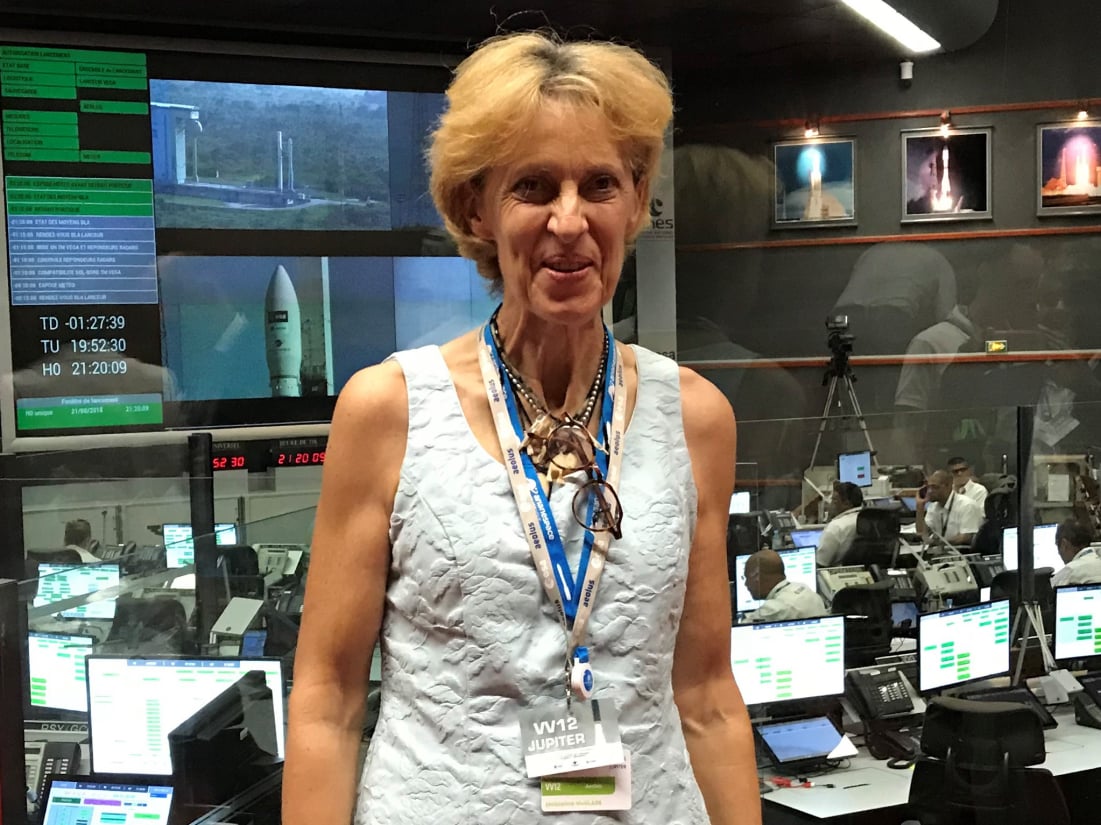
Professor Jacqueline McGlade
Professor Jacqueline McGlade is a world-renowned scientific leader. As Chief Scientist of UNEP and head of the European Environment Agency, she created global programmes that advanced climate and biodiversity science infrastructure. A leading figure in natural capital - recognised with the 2013 Global Citizen Award - she is the author of over 200 highly cited research publications and holds professorships at Strathmore University Business School and UCL.